Why the Crowd's Favorite Is Often Your Worst Bet
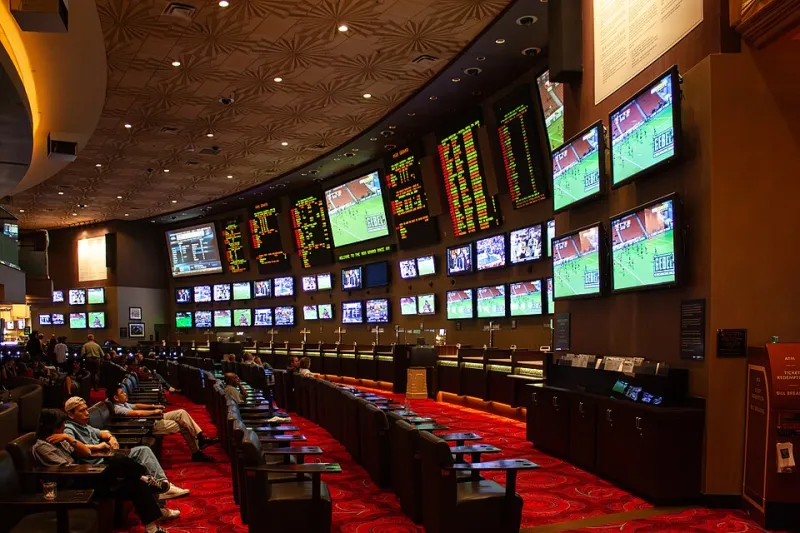
Photo: Chad Davis, CC BY 2.0, via Wikimedia Commons
There's a moment every bettor knows. You pull up the lines on a Sunday morning, and one game just screams at you. The favorite is rolling, their opponent is banged up, the public is piling on, and the talking heads on ESPN haven't said anything else all week. It feels less like a bet and more like picking up free money off the sidewalk.
That feeling? That's the trap.
Consensus favorites — the teams or players that virtually every recreational bettor agrees will win — are one of the most reliable wealth-transfer mechanisms in sports wagering. Not wealth to you. Wealth from you, straight into the sportsbook's pocket. Understanding why that happens, and how to flip the script, is one of the sharpest edges you can develop as a bettor.
The Psychology Behind the Chalk
Human beings are wired to seek certainty, and sports betting exploits that instinct beautifully. When a team has won six straight, when a star quarterback is healthy while the opposing secondary is decimated, when every analyst in the country is pointing the same direction — our brains register that as safe. We're not really analyzing anymore. We're confirming a story we've already decided to believe.
This is what behavioral economists call availability bias: we overweight vivid, recent, widely-discussed information and treat it as more predictive than it actually is. The Super Bowl champion from last season feels like a lock in Week 2. The team that got blown out on national TV two weeks ago feels unbackable. Neither perception is grounded in the kind of cold probability math that actually wins bets over time.
Sportsbooks understand this better than almost anyone. They're not just setting lines to reflect true probability — they're setting lines to balance action and guarantee margin. When the public floods to one side, the book shades the number to capitalize on that imbalance. The favorite gets more expensive. The underdog gets more valuable. Every dollar of public money chasing the chalk is quietly inflating the line against the very people betting it.
What the Numbers Actually Say About Heavy Favorites
Let's get concrete. Across major American sports, teams or players listed at -200 or heavier (meaning you're risking $200 to win $100) win outright at a rate that sounds impressive until you do the math. A -200 favorite implies roughly a 66.7% win probability just to break even at the sportsbook. In reality, across a large sample of NFL, NBA, and MLB games, heavy favorites win at rates that frequently fall short of that implied probability — especially once you account for the vig.
The 2023 NFL season offered a sharp reminder. Several teams that opened as double-digit favorites in high-profile matchups failed to cover at a rate that would have made a straight chalk-betting strategy deeply unprofitable. The Kansas City Chiefs, widely considered the league's gold standard, covered the spread less than 55% of the time during the regular season — far below what the public's confidence in them would suggest.
Or consider the 2022 MLB postseason, where the Atlanta Braves entered as consensus favorites against the Philadelphia Phillies. The Phillies, written off by most casual fans, went on to eliminate them. Bettors who had been laying juice on Atlanta all series took a significant hit, while anyone who had been tracking line value on Philadelphia quietly cashed out.
These aren't flukes. They're patterns.
Where the Real Value Hides
Sharp bettors — the ones sportsbooks actually worry about — aren't looking for the team most likely to win. They're looking for the team whose odds don't accurately reflect their true probability of winning. That distinction sounds subtle, but it's everything.
An underdog listed at +180 is implying roughly a 35.7% win probability. If your honest, data-driven analysis suggests that team actually wins this matchup 42% of the time, you've found value. You don't need them to win every time. You just need the price to be wrong in your favor often enough to generate positive expected value over a large sample.
So where do you find those mispriced underdogs?
Fade the narrative. The matchups with the heaviest public consensus are usually the ones with the most distorted lines. When 80% or more of the betting tickets are on one side — data you can track through public betting percentage tools — that's often a signal that the other side has been artificially inflated in value.
Look for recency overreaction. A team that just got crushed 38-7 on Monday Night Football is going to see its next spread ballooned by public perception. But if the loss was a fluke — a turnover-heavy game that the underlying stats suggest was far closer — the line may be overcorrecting. That's a buying opportunity.
Track line movement against the grain. If a game opens with 75% of tickets on the favorite but the line actually moves toward the underdog, that's reverse line movement — a strong signal that sharp money is hitting the other side. The public may be screaming chalk, but the people who move markets are saying something different.
Dig into situational spots. Divisional underdogs, teams playing on short rest against fatigued opponents, home underdogs in must-win situations — these contextual factors frequently create value that public bettors overlook because they're focused on the headline narrative rather than the situational reality.
Breaking the Certainty Addiction
The hardest part of fading consensus favorites isn't finding the data. It's overcoming the emotional discomfort of betting against the crowd. When you put money on a +165 underdog that everyone around you thinks is a joke, you're accepting the very real possibility that you'll lose that bet and feel foolish. That social and psychological pressure is real, and it's exactly why most bettors never make the shift.
But here's the reframe that changes everything: you are not betting on who wins. You are betting on whether the price is right. A loss on a well-reasoned underdog bet with positive expected value is not a mistake. Betting -250 on a chalk play because it felt safe — that's the mistake, even if it wins.
The sportsbook doesn't care about your feelings. It cares about your money. And it's built an entire business model around the human desire to feel certain.
Sharp bettors have learned to weaponize that against the house. When the crowd is chasing the sure thing, they're looking the other direction — quietly finding value in the matchups everyone else has already written off.
That's not contrarianism for its own sake. That's just good math.