When Your System Meets Reality: The Hidden Cost of Ignoring Variance

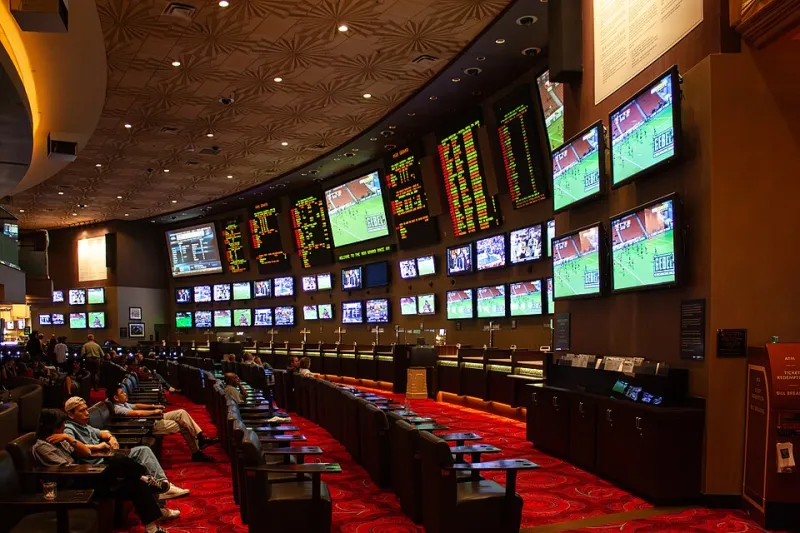
Photo: Zakir Mirshanov, CC BY-SA 4.0, via Wikimedia Commons
Everybody loves a system. There's something deeply satisfying about running the numbers, back-testing your model against five seasons of historical data, and watching a clean edge emerge from the spreadsheet. You've done the work. The math checks out. Now you just execute.
Then Week 4 hits. Three key injuries in a single Sunday. A weather-driven disaster in a game your model had priced perfectly. A referee crew that apparently forgot what pass interference looks like. Suddenly your "mathematically sound" system is bleeding units, and you're staring at a drawdown that your back-test told you would only happen once every three years.
Welcome to the volatility tax — the hidden surcharge that real-world variance quietly charges every bettor who mistakes historical averages for guaranteed outcomes.
Why Back-Tests Lie (At Least a Little)
Back-testing is useful. Nobody's arguing otherwise. But there's a fundamental problem with optimizing a betting strategy against historical data: it teaches your system how to handle situations that have already happened, not the ones that are about to.
Historical models are built on averages. Average injury rates. Average weather impact. Average referee tendencies. Average public betting splits. And averages, by definition, smooth out the outliers — the exact events that will eventually test your bankroll to its breaking point.
When you build a system around the mean, you're essentially designing a car for highway driving and then acting shocked when a blizzard shows up. The car isn't broken. It just wasn't built for that.
Sharp bettors understand this distinction. They don't ask, "Does my system work on average?" They ask, "How badly does my system perform when the worst 5% of scenarios actually occur?"
The Difference Between Risk and Uncertainty
There's a classic economic distinction that most recreational bettors never think about, but it explains a lot about why betting systems collapse under pressure.
Risk is when you don't know the outcome, but you know the probability distribution. Flip a coin — you don't know if it lands heads, but you know there's a 50% chance it does.
Uncertainty is when you don't even know the distribution. A starting quarterback suddenly announces he's dealing with a personal matter and won't play. His backup has never taken a meaningful regular-season snap. How do you model that?
Most betting systems are built to handle risk. They fall apart under uncertainty — and sports, more than almost any other domain, manufactures uncertainty on a weekly basis.
The NFL alone produces roughly 30 to 40 significant unexpected developments every single week of the regular season. Multiply that across the NBA, college football, MLB, and the NHL, and you're swimming in genuine uncertainty constantly. Any system that doesn't account for this is operating with a blind spot the size of a stadium.
Quantifying Your Actual Risk Tolerance
Here's a question most bettors can't honestly answer: How many consecutive losing units can you absorb before you start making irrational decisions?
Not how many losing units you think you can handle in theory. How many before you start chasing? Before you bump your unit size to "get back to even faster"? Before the system you built rationally starts getting overridden by emotion?
That number — your real-world breaking point — is your true risk tolerance. And it's almost always lower than the number you'd write down on paper.
A common exercise among serious bettors is something called stress-testing your drawdown. Take your system's worst historical losing streak and multiply it by 1.5. That's your planning benchmark. If your model's worst recorded run was 12 units down, you should be financially and psychologically prepared to survive an 18-unit drawdown before you ever place a single bet.
Why 1.5x? Because the worst thing that has happened historically is not the worst thing that can happen. It's just the worst thing that has. Those are very different statements.
The Compounding Problem Nobody Talks About
Volatility doesn't just hurt you in the obvious ways. It compounds.
When your system hits a rough stretch and your bankroll drops 20%, you now need a 25% return just to get back to where you started. Drop 30%, and you need a 43% recovery. The math gets uglier the deeper the hole gets.
This is why the bettors who survive long-term aren't necessarily the ones with the sharpest models. They're the ones who manage drawdowns aggressively enough that they never fall into the compounding trap.
Practical implications:
- Never flat-bet at a fixed dollar amount when your bankroll shrinks. Scale your unit size down proportionally so your percentage exposure stays constant.
- Build a "variance reserve" into your bankroll from day one. Treat 20-25% of your total wagering bankroll as untouchable — money that exists solely to absorb catastrophic variance without forcing you to reduce bet frequency prematurely.
- Set explicit pause triggers. Decide in advance: "If I lose X units in Y days, I stop betting for 48 hours and review." This isn't weakness. It's system protection.
What the Sharpest Bettors Actually Do Differently
Professional sports bettors and sharp recreational players don't just build better models. They build better contingency frameworks around those models.
They assume their edge is smaller than they think it is. Where a recreational bettor might believe they've identified a 4% edge, a sharp bettor mentally prices it at 2% and builds their staking strategy accordingly. The cushion matters.
They treat outlier scenarios as certainties, not possibilities. Not "if a star player goes down in the first quarter," but "when it happens, here's exactly what I do." Pre-committed decision rules prevent emotional override.
And critically, they separate system evaluation from short-term results. A losing week doesn't mean the system is broken. It might just mean variance showed up early. The question to ask after a bad run isn't "Is my system wrong?" — it's "Did I follow my system correctly?" Those are completely different problems with completely different solutions.
The Takeaway
Building a betting system that works in ideal conditions is table stakes. The real skill — the thing that separates bettors who last from bettors who flame out — is engineering a strategy that survives when conditions are anything but ideal.
Variance is not an edge case in sports betting. It's a feature of the environment. The unexpected isn't a disruption to your system. It's a test of whether your system was ever truly ready.
Plan for the chaos. Size for the worst case. And the next time your model gets blindsided by something it never saw coming, you'll already know exactly what to do.