Free Money Has a Price: The Hidden Agenda Behind Sportsbook Promotions
Every new bettor gets the same pitch. Sign up, deposit a hundred bucks, and the sportsbook doubles it. Sometimes there's a "Bet $5, Get $200" deal plastered across the homepage. Other times it's a boosted line on a marquee game — a team that's normally -110 suddenly showing up at +150 for one bet, one time only.
It feels like found money. And that feeling? That's exactly what they're counting on.
Sportsbooks aren't charities. Every dollar they give away in promotions is a calculated investment, and the return they're expecting isn't goodwill — it's your long-term action. The smartest thing you can do before redeeming any offer is ask yourself one question: why are they doing this?
The Real Purpose of a Welcome Bonus
Welcome bonuses serve two functions that most bettors never think about.
First, they're acquisition tools. The sports betting market in the US is brutally competitive. DraftKings, FanDuel, BetMGM, Caesars — they're all fighting for the same pool of customers, and a flashy signup offer is the easiest way to get someone in the door. That part's obvious.
The second function is less obvious but way more important: welcome bonuses are diagnostic tools. The way you use your bonus tells a sportsbook an enormous amount about you as a bettor. Do you immediately try to squeeze value out of it by betting against the spread on low-margin markets? Or do you load it onto a parlay? Do you chase losses when the bonus bet loses, or do you walk away?
Sportsbooks track all of this. They're building a profile on you from the first bet you place, and the bonus period is their best opportunity to see how you behave when you think you're playing with house money.
Playthrough Requirements: Where the Math Gets Ugly
Here's where a lot of bettors get burned without even realizing it. Most deposit match bonuses come with playthrough requirements — sometimes called rollover requirements — that force you to wager a multiple of the bonus before you can withdraw anything.
A common structure looks like this: deposit $100, get $100 in bonus cash, but you have to wager $1,000 (10x the bonus) before you can cash out. That sounds manageable until you remember that the house has an edge on every single bet. At standard -110 juice on both sides, the vig is roughly 4.5%. Run $1,000 through that grinder and you're expected to lose about $45 just meeting the requirement.
So that "free $100" just cost you $45 in expected value before you even start betting with your own money. Some books push those multipliers to 20x or 25x, which makes the math even uglier.
Odds boosts have their own version of this. That boosted line on the Chiefs or the Yankees looks great in isolation, but boosts almost always come with bet limits — usually $25 or $50 max. Even if the boost genuinely represents positive expected value (and many do, briefly), the dollar amount you can actually extract is capped so tightly that it barely moves the needle.
How Sharp Bettors Actually Use Promotions
Here's the thing — experienced bettors don't ignore promotions. They just use them differently.
The approach most sharp bettors take is called bonus hunting or bonus whoring, and it involves treating the promotional value as a separate calculation from your regular betting. Instead of dumping a bonus into whatever game is on tonight, they identify the lowest-vig markets available — often totals on major sports or alternate spreads — and run the playthrough requirement through those lines to minimize expected losses while still clearing the bonus.
For odds boosts specifically, the move is simpler: only take a boost if the boosted line represents positive expected value on its own merits. If a team you'd bet at +120 is being boosted to +150, that's potentially useful. If a team you'd normally fade is being boosted from -200 to -175, that's still a bad bet — it's just a slightly less bad one.
The biggest trap is letting a promotion influence which game you bet. The moment you're placing a wager you wouldn't otherwise make just to clear a bonus, the sportsbook has already won.
The Profiling Problem
Let's get back to that diagnostic function for a second, because this is the part that really stings.
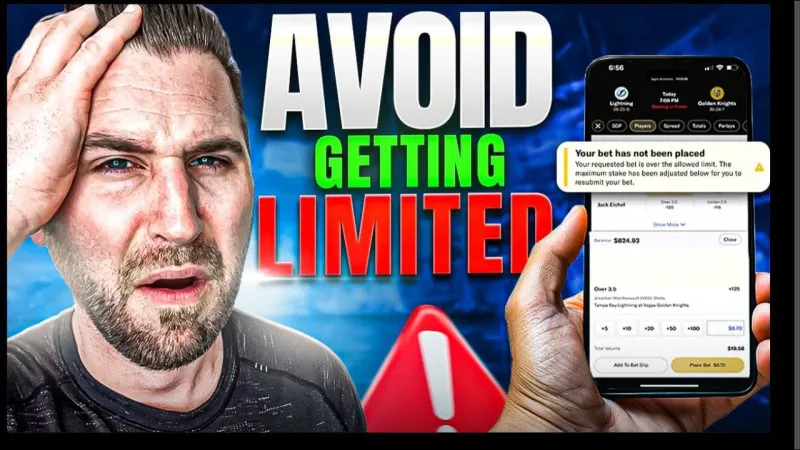
Sportsbooks use your early betting behavior to segment you as a customer. Bettors who show sharp tendencies — line shopping, betting early, targeting low-margin markets, winning consistently — get flagged. Their accounts get limited. Their promotions dry up.
Bettors who show recreational tendencies — parlays, prop bets, betting on their favorite team, chasing losses — get showered with offers. More reload bonuses. More boosts. More reasons to keep depositing.
That's not a coincidence. The promotional pipeline is specifically designed to keep recreational bettors engaged and depositing. If your inbox is full of offers, it might be worth asking yourself what that's actually saying about your betting record.
What to Actually Do With This Information
None of this means you should never touch a promotional offer. It means you should approach them the way a poker player approaches a free tournament entry — as a tool with limited upside that you use strategically, not emotionally.
A few practical rules worth keeping in mind:
Read the terms before you deposit. Playthrough requirements, eligible markets, time limits — these details are in the fine print for a reason. A 1x playthrough bonus is very different from a 10x one.
Never let a promotion dictate your bet selection. If you'd take the bet without the promo, great. If you're only taking it because of the promo, slow down.
Track your promotional ROI separately. Keep a record of every dollar you've claimed in bonuses and every dollar you've lost meeting requirements. Most bettors are surprised by how thin the margins actually are.
Understand that the best offers go to the worst bettors. That's not a judgment — it's just how the business model works. The sportsbook's generosity is calibrated to your value as a losing customer.
Free money is never really free. But if you know what you're looking at, you can at least make sure you're the one doing the using.