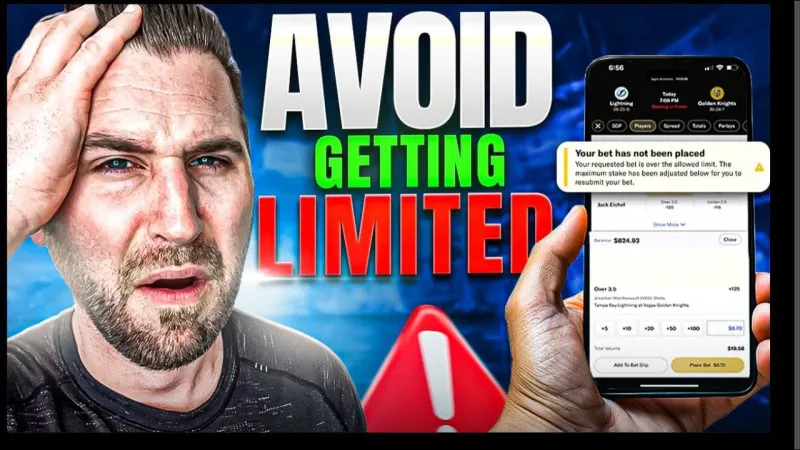
Low Limits, High Signal: What Sportsbooks Are Really Telling You When They Cap a Bet

Photo: P1898, CC BY 4.0, via Wikimedia Commons
The Bet They Don't Want You to Make
Imagine walking into a casino and noticing that one specific slot machine has a velvet rope around it. Management says you can play, but only for a dollar at a time instead of the usual hundred. Most people would walk past it without a second thought. A sharp bettor would stop and ask: why is that machine different?
That's essentially what's happening when a sportsbook slashes the maximum bet on a specific game, a particular side, or a niche prop. It's not random. It's not a glitch. It's a deliberate decision made by risk managers who are trying to limit their exposure to something they're genuinely worried about.
And that worry? That's your green light.
What Reduced Limits Actually Mean
Sportsbooks don't hand out reduced limits like parking tickets. The process of capping a bet — especially on one side of a specific market — takes real effort. Oddsmakers have to identify the vulnerability, adjust the limit manually, and accept the business cost of turning away action.
They don't do that unless they have a reason.
When a book drops the max bet on, say, a Tuesday night NBA total from $5,000 to $200, they're essentially admitting that their number might be wrong — or that they know sharp money is about to hit it hard and they can't afford the exposure. Either way, the underlying message is the same: this line is soft and we know it.
For the recreational bettor who sees that low limit and assumes the bet is somehow cursed or suspicious, the reaction is to move on. But for anyone paying attention, that low ceiling is a flashing billboard advertising value.
The Defensive Posture of a Nervous Sportsbook
Here's a useful way to think about it. Sportsbooks are running a business, and like any business, they manage risk. When they feel confident in a line, they'll take big action on it all day. High limits are a sign of confidence — the book believes the price is right and they're comfortable absorbing whatever the market throws at them.
Low limits signal the opposite. They're a defensive posture. The book is pulling back its exposure because it doesn't fully trust its own number.
This can happen for a few different reasons:
- Sharp syndicate attention. If professional betting groups have been hammering a particular angle, books will quietly reduce limits to slow the bleeding while they figure out how to adjust.
- Late-breaking information. An injury report, a lineup change, or weather data that hasn't fully been priced into the line yet can trigger a preemptive limit reduction.
- Model uncertainty. Some markets — especially props, team totals, or alternate lines — are harder to price accurately, and books will cap exposure when their confidence is low.
In every one of these cases, the sportsbook is essentially waving a flag that says: we're not sure about this one.
How to Use This as Actionable Intelligence
The first step is actually noticing when limits are reduced. This sounds obvious, but most bettors never check. Before placing a bet, look at the maximum allowed wager. If it's dramatically lower than the typical ceiling for that sport or market at that book, that's information worth acting on.
Here's a practical approach:
Compare across books. If Book A has a $200 max on a side and Book B is still taking $2,000 on the same line, that gap tells you something. Book A has flagged this as a vulnerable number. Book B either hasn't caught on yet or disagrees. That's an opportunity to get your bet in at Book B before they figure it out.
Look at which side is capped. This is critical. If the limit is reduced on one side of a game but not the other, the book is specifically protecting itself against that direction. They're not worried about both sides equally — they're worried about that side. Guess which side probably has value.
Don't ignore the timing. A limit reduction that happens 48 hours before a game carries different implications than one that shows up two hours before kickoff. Early reductions often reflect sharp early action. Late reductions can signal breaking news that the market hasn't fully absorbed.
Shop aggressively. Reduced limits at one book are your cue to hit other books quickly. The whole point is to find the price before it moves everywhere. Once the line catches up across the market, the edge narrows. Speed matters.
A Word on Proportionality
One thing worth keeping in mind: reduced limits don't tell you how much value exists, only that some probably does. A capped line at a book that's historically sharp carries more weight than a capped line at a recreational-focused book that moves on public perception.
Also, the size of the reduction matters. A limit that drops from $10,000 to $3,000 is a minor adjustment — maybe just routine risk management. A limit that drops from $5,000 to $50 is a book that's genuinely scared. Learn to read the degree of the restriction, not just its existence.
And yes, if you're consistently betting into reduced limits and winning, you may eventually find your own account restricted at certain books. That's a separate conversation — but it's also, as we've written about before, a strange kind of compliment.
Flip the Script on How You Read Restrictions
The mental shift required here isn't complicated, but it does run against instinct. Most bettors are conditioned to see a restriction as a warning — something to avoid. The sharper move is to treat restrictions as data points, not deterrents.
A sportsbook that reduces limits on a specific bet is a sportsbook that's protecting itself. And when a business goes out of its way to protect itself from you making a particular wager, that's usually a pretty good sign the wager is worth making.
Next time you see a bet with an unusually low ceiling, don't walk away. Ask why. Then go find a book that hasn't caught up yet and get your money down before they do.
That's not reckless. That's reading the room.