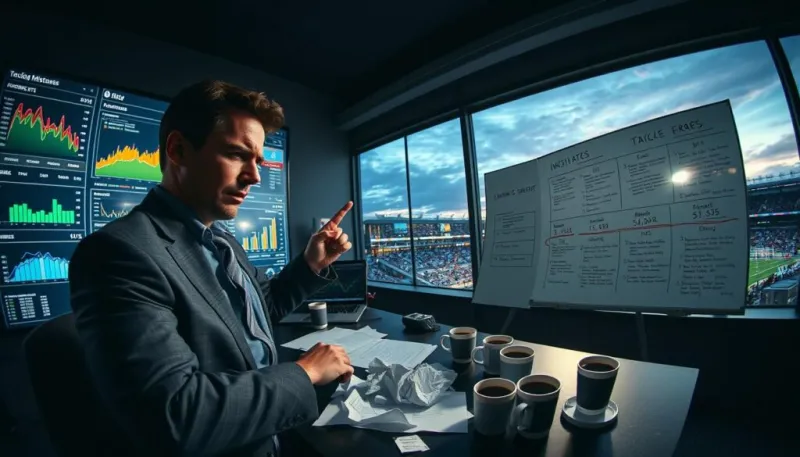
Lines Moving in the Dark: How Sportsbooks Shift Odds Before Anyone Even Bets
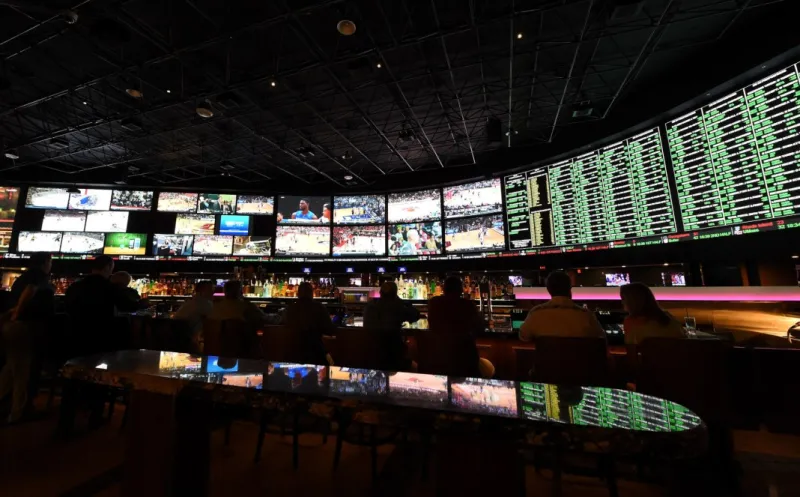
Photo: sportsbook digital odds board glowing screens dark room, via lailluminator.com
You're scrolling through a Tuesday afternoon prop menu — something low-key, like a mid-week NBA player assists total or a niche NFL receiving yards line — and you notice the number has already shifted. Maybe it opened at 5.5 and it's sitting at 6.5 before a single public bet has come in. No injury news. No major media coverage. No sharp syndicate hammering the ticket window.
So what happened?
Welcome to what some in the industry quietly call the phantom adjustment — a line move driven not by actual betting action, but by the internal machinery of how sportsbooks anticipate, model, and pre-position their markets. It's one of the least-discussed dynamics in sports wagering, and for bettors who learn to read it, it opens up a genuinely interesting layer of opportunity.
The Book Isn't Waiting for You
Most recreational bettors operate under a simple mental model: lines move because money comes in. Lopsided action on one side triggers the book to adjust the number to attract balanced action on the other. That's true for high-volume markets — your NFL point spreads, your major moneylines. But it doesn't fully explain what happens in the sprawling universe of props, alternate lines, and niche markets.
In those markets, sportsbooks aren't always reacting to bettors. They're getting ahead of them.
Modern books — especially the major US operators like DraftKings, FanDuel, and BetMGM — run sophisticated algorithmic models that continuously reprice odds based on a wide range of inputs: updated player data, weather, lineup changes, correlated market signals from other books, and even predictive models built around how sharp bettors have historically attacked similar numbers. The book is essentially asking: if a sharp bettor were looking at this line right now, where would they find value? And then it moves the line to close that gap before anyone places a bet.
It's preemptive pricing, not reactive pricing.
Why Niche Markets Are the Lab
This phenomenon is especially visible in low-volume markets for a simple reason: there's no masking action. When a high-volume market like an NFL spread moves, you can usually trace it to a wave of tickets or a large bet on one side. But when a random Tuesday player prop shifts with zero volume behind it, the only explanation is the book's internal model firing.
Think about it from the book's perspective. They're posting hundreds — sometimes thousands — of props for a single night of games. They can't staff a team of traders to manually monitor every line. So they deploy automated systems that pull in real-time data and continuously recalibrate. A player gets bumped up in the rotation? The minutes prop adjusts automatically. A team's pace metric shifts over the last five games? The points totals reprice without anyone touching a keyboard.
The result is a market that looks like it moved on action, but really moved on information — information the book's model processed before you even opened the app.
Reading the Ghost Move
So how does a savvy bettor actually use this? The key is developing a feel for why a line moved, not just that it moved.
First, compare opening lines across multiple books. If a player prop opens at 24.5 points on one book and 26.5 on another, that gap tells you something. One of those books is either behind on its modeling or has made a deliberate choice to post a softer number. The divergence is the signal.
Second, watch for lines that move without any corresponding news cycle. If there's no injury update, no lineup change, no public betting surge visible on tracking tools like Action Network, and a line still moves — that's a phantom adjustment. The book is repositioning based on its own intelligence, not public pressure. Ask yourself: does the new number make sense given what you know? If it doesn't, you might be looking at an overcorrection.
Third, pay attention to timing. Books often post early lines on niche props knowing they'll need to adjust before game time. If you're betting a low-volume prop early in the week, you're essentially competing against the book's model in a low-information environment. That can cut both ways — sometimes the model is sharp and you're the one getting faded, but sometimes the model is working off incomplete data and the early number is genuinely exploitable.
The Arbitrage Angle
Phantom adjustments also create short windows of cross-book arbitrage or middle opportunities that sharp bettors actively hunt. Because different sportsbooks run different models with different data inputs and different update frequencies, the same prop can sit at meaningfully different numbers simultaneously — even after both books have "adjusted."
A bettor who's watching multiple books at once and understands why lines are moving can sometimes catch a situation where Book A has already repriced upward based on its model while Book B is still sitting at the original number. That gap won't last long — books share market intelligence and the slower-moving book will eventually catch up — but the window can be wide enough to get a bet down.
This is why serious bettors maintain accounts at multiple sportsbooks. It's not just about finding the best juice on your main bets. It's about being positioned to act when these cross-book discrepancies open up, particularly in the prop and niche markets where phantom adjustments are most common.
Don't Mistake Noise for Signal
A word of caution here: not every unexplained line move is a golden opportunity. Sometimes the book's model is simply better informed than you are. If a prop moves and you can't figure out why, there's a real chance the book knows something — a practice report detail, a rotational change, a historical tendency in that specific matchup — that hasn't hit the public information stream yet.
The phantom adjustment isn't always a mistake. Sometimes it's the book correctly anticipating where the sharp money would go if sharps were paying attention. In that case, fading the move is just walking into a trap.
The discipline is in learning to distinguish between a book overcorrecting on incomplete data versus a book correctly pre-positioning on superior information. That takes time, pattern recognition, and a lot of line-watching. But the bettors who develop that skill are operating at a level most casual players never reach.
The Takeaway
Sportsbooks aren't passive participants waiting for bettors to show them where the value is. In niche and low-volume markets especially, they're actively modeling, anticipating, and repositioning — often before a single dollar changes hands. Understanding that dynamic shifts how you approach these markets entirely.
Instead of just asking "where is the public betting?" start asking "why did this line move when nobody was betting it?" That question, asked consistently and with the right tools to investigate it, is where a real edge lives.
Lines don't always move because of you. Sometimes they move because the book already saw you coming.